sources: Cambridge Lower Secondary Science Stage 9 – Student’s Book
Photosynthesis
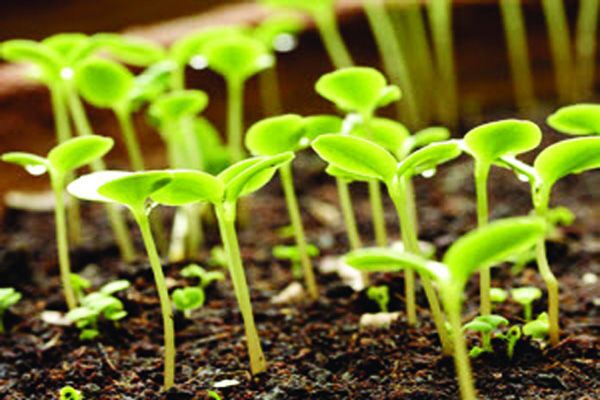
Most plants make their own food using a process called photosynthesis. This process uses chemical substances to make new chemical subtances.
Photosynthesis is a process involving a series of chemical reactions by which carbon dioxide and water are converted into glucose and oxygen.
Plant carbohydrates
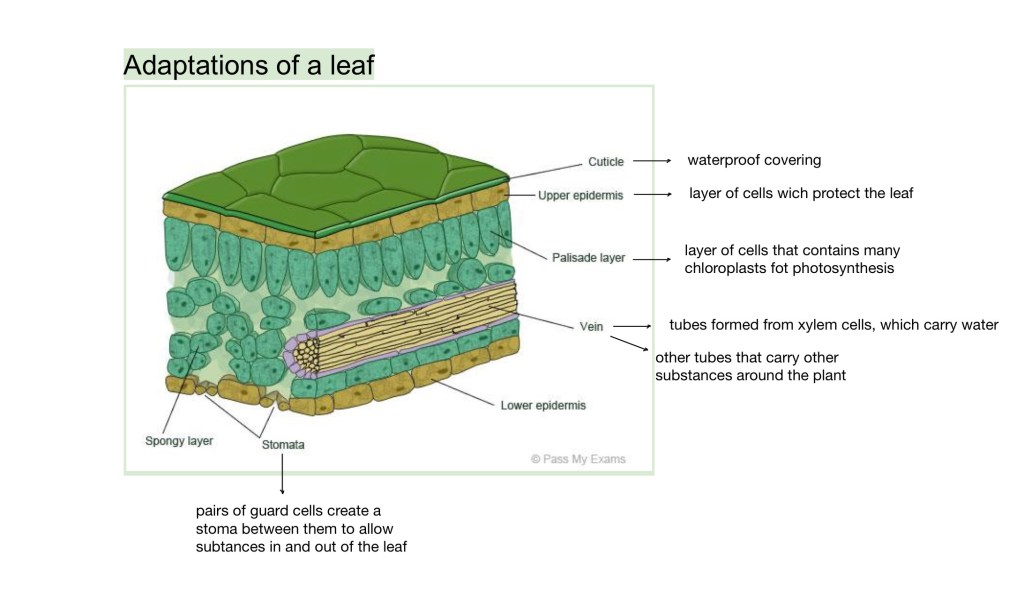
Carbohydrates are a group of compounds made from carbon, hydrogen and oxygen.
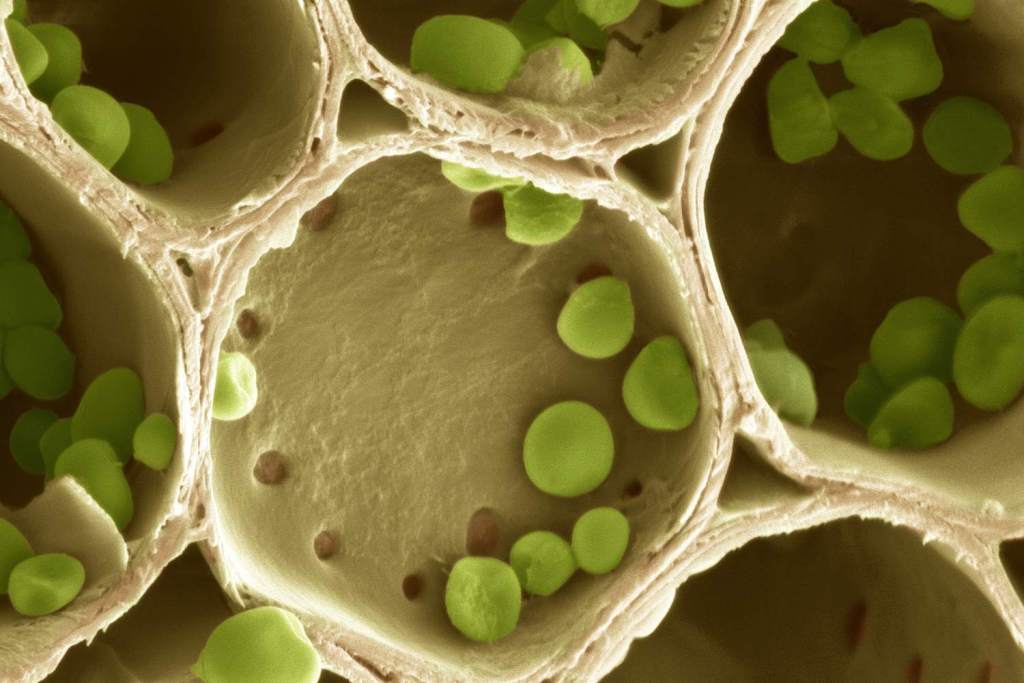
aerobic respiration– respiration that needs oxygen to release energy from glucose
carbohydrate– nutrient needed for energy, for example, starch and sugars
starch– large, insoluble carbohydrate made by plants to store energy and an important energy source in human diets
sugar– soluble carbohydrate, which exists as small molecules, for example glucose
Absorbing water
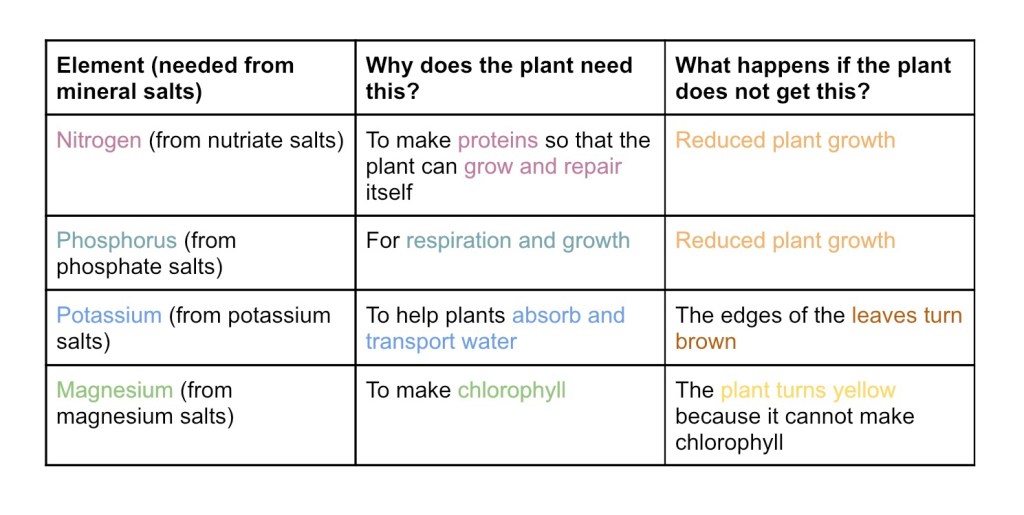
Root hair cells absorb water and mineral salts. A ‘root hair’ gives a cell a lot of surface area, which helps it absorb quickly.

Transporting water
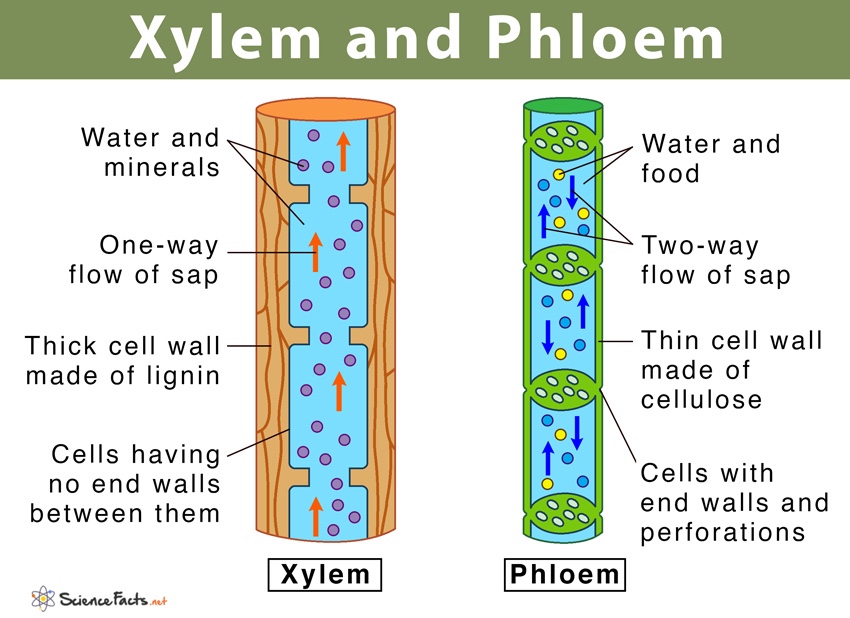
A plant transports water and minerals salts in specialised xylem cells. These cells form chains and then die, to form vessels. The xylem vessels run from the roots up to the leaves. They have thick cell walls, containing lingin, which makes the walls strong and stops them from collap
Transpiration

Water and mineral salts move from root hair cells to other root cells and into xylem vessels. They travel up the stem into the leaves and then the water vapour exits the plant through the stomata.
Mineral Salts
 Science in a Nutshell